The narrative adopted by the media has always influenced public perception, and the Western media has consistently shown hypocrisy in this regard.
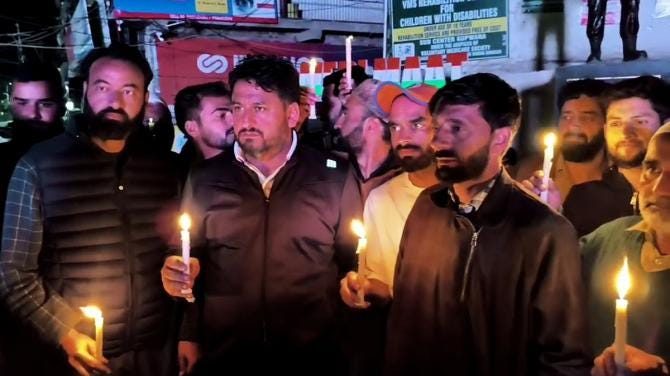
The most recent example is the terrorist attack in Pahalgam, Kashmir, which claimed the lives of 26 innocent civilians.
Pahalgam Attack: India’s 7 October Moment?
Pakistan-backed terror strikes again. Justice must go beyond borders.
While the international community came together to condemn the attack, Western media outlets once again revealed their bias, downplaying the brutality of the incident and spinning their narrative to avoid using the word “terrorism.”
This isn’t journalism — it’s propaganda, and it’s dangerous.
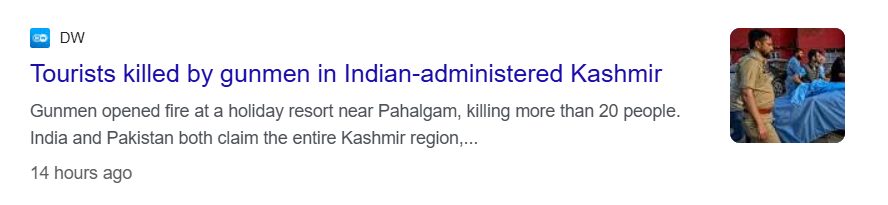
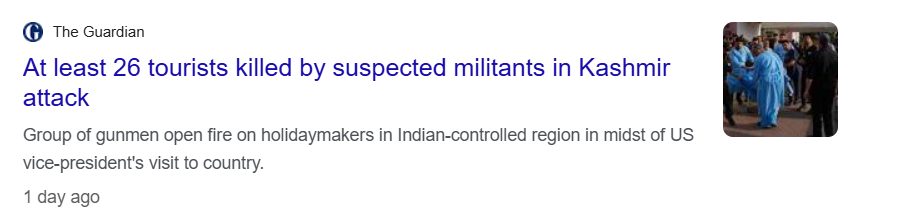
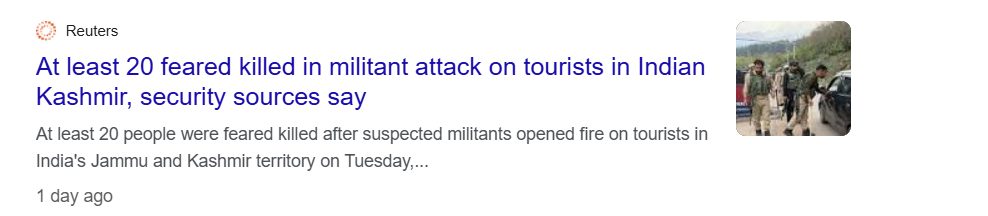
You may see the headline of the article displayed here stating that it was a gunman attack.
Take the BBC’s coverage, for example.
Their report used the word “terror” three times, but only in quotes from world leaders. Not once did the outlet directly call the incident a terrorist attack. The Guardian followed the same pattern. Its initial headline blandly stated: “Suspected militants killed at least 26 tourists.” Suspected? Tourists were gunned down in cold blood, yet the word “terrorist” was conspicuously absent.
Language matters, as it shapes the narratives.
Where the major global news outlets tiptoe around words like “terrorism” — especially in the context of India — it betrays a glaring bias.
Where the leaders around the world are calling it a brutal terrorist attack.
US President Donald Trump called Prime Minister Modi, condemning the attack and vowing to support India in its fight against terrorism.
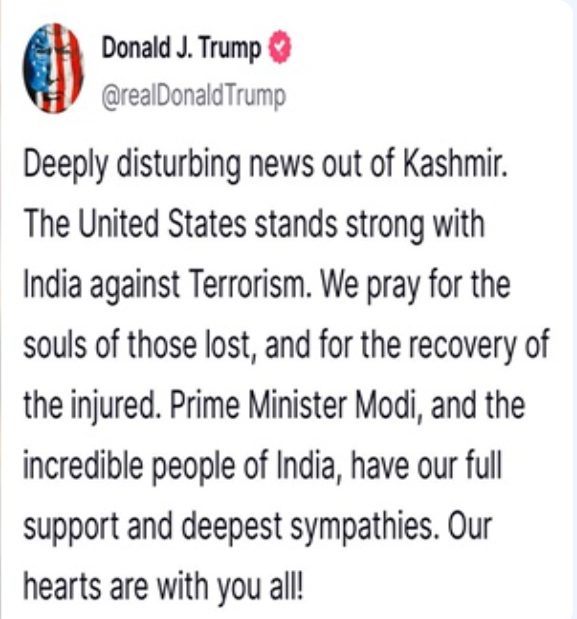
His deputy, JD Vance, currently in India, echoed the sentiments and extended condolences to the people of Kashmir.
China, too, issued a strong statement. “China firmly opposes terrorism in all its forms,” said a spokesperson, mourning the victims and offering sympathies to the injured.
Israel’s Benjamin Netanyahu, Italy’s Giorgia Meloni, France’s Emmanuel Macron, Germany’s Olaf Scholz, Russia’s Vladimir Putin, and the UK’s Prime Minister — unanimously denounced the brutality.
In moments like these, geopolitics often takes a backseat.
Or at least, it should.
These headlines are not just text, they also influence international perception and policy.
When they downplay terrorism based on political convenience, the impact is not just journalistic — it’s geopolitical.
Like Consider how these same outlets covered the Hamas attacks on Israel in October 2023.
Words like “terrorist” and “terror attack” were used freely, unambiguously, and without quotation marks.
Why? Because the Western media, particularly in the US, largely aligns with Israel’s narrative.
The moral clarity they showed for Israel evaporates when the victim is India.
India, by contrast, has been consistent.
India called 9/11 a terror attack.
And also recognized October 7 as a terror attack. And we call what happened in Kashmir exactly what it is:
A terror attack.The Western media must stop this hypocrisy and stop spinning their narrative, especially in light of the recent terrorist attack that happened on Indian territory.
Terrorism is Terrorism: There is No Good or Bad Terrorism
Pakistan’s Own Snakes Turn Against It
As I stated in my previous article, Terrorism is terrorism. There should be zero tolerance against it, no matter where it occurs or who the victims are.
When civilians are murdered en masse, that’s terrorism — regardless of who the victims are, where they’re from, or which country is involved.
Anything less is not just hypocritical — it’s dangerous.