We are living in the most volatile period of the 21st century. Something big is unfolding in front of our eyes.
Power is shifting, old institutions are weakening, and the systems that once guaranteed stability are no longer trusted the way they used to be.
What we are witnessing today is not just a market cycle
It is a transition from one era to another.
Gold prices are at all-time highs.
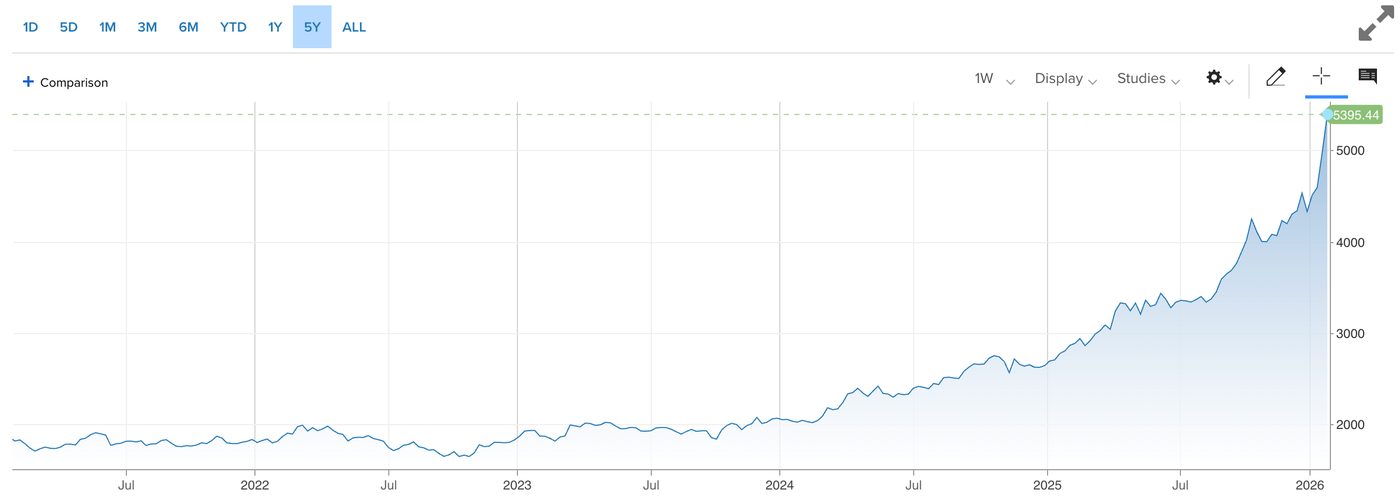
Silver is rising even faster than gold.Stock markets continue to climb higher, but the rise seems fragile, detached from reality, almost bubble-like.
The United States is sitting on $38 trillion debt, a level that economists admit that it’s unsustainable.
Countries around the world are slowly reducing their dependence on the US dollar and US Treasury bonds.
And over-favours Artificial intelligence is very much overvalued.
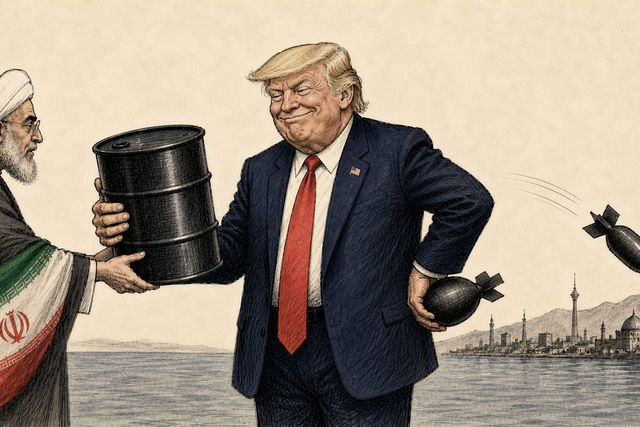
And what all makes this worse is Mr. trump geopolitical and economic policies
Geopolitics is more unstable today than at any time since the Cold War.
All these forces are moving at the same time.
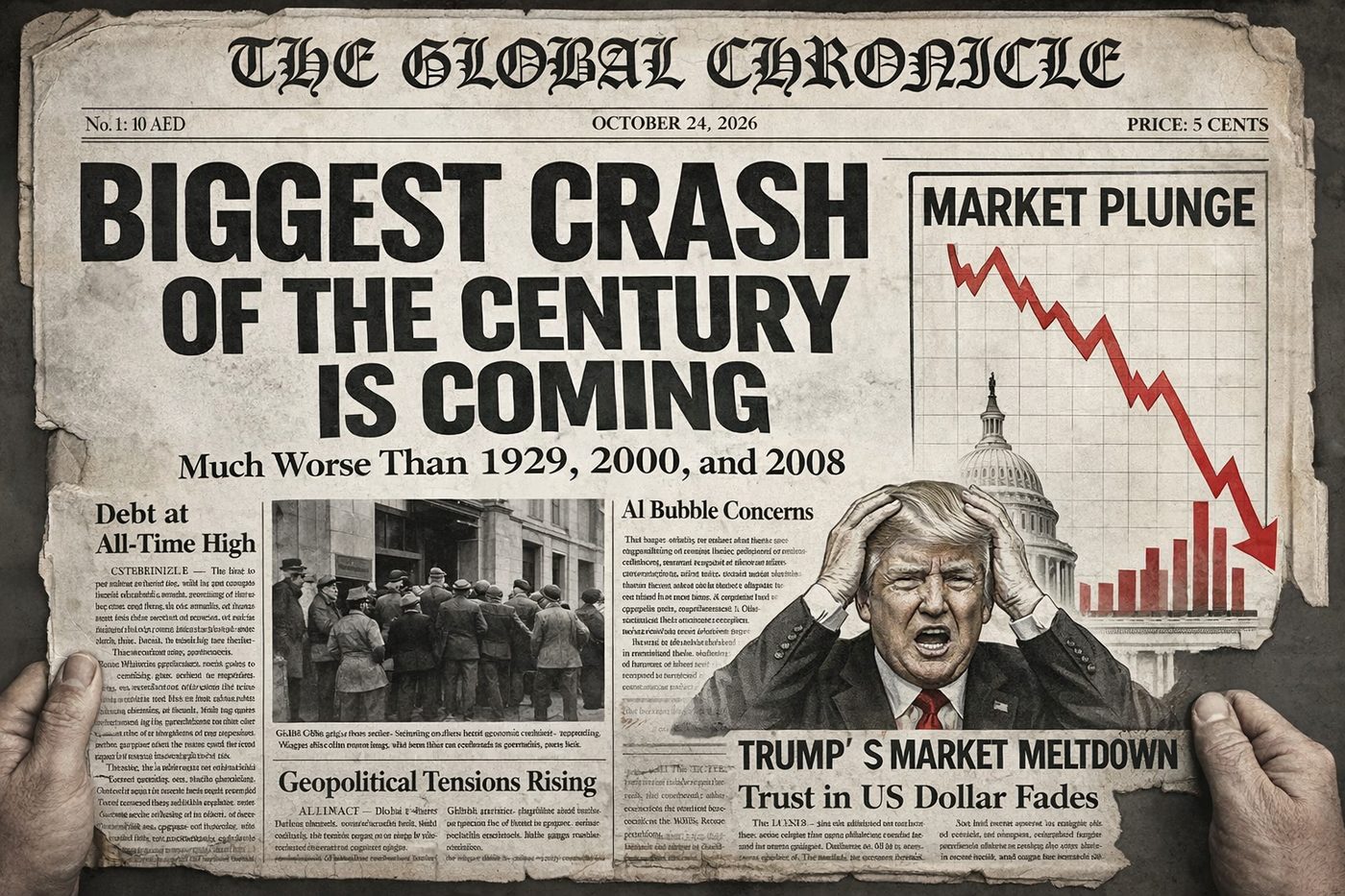
History teaches us something very important: big crashes never come out of nowhere.
They are the result of long-standing pressures inside the system. When those pressures reach a breaking point, the system does not gently adjust — it breaks violently.
Today, all signs suggest that the system is at the breaking point.
How Big Crashes Actually Begin
To understand why this moment is different, we must first understand how crashes usually form.
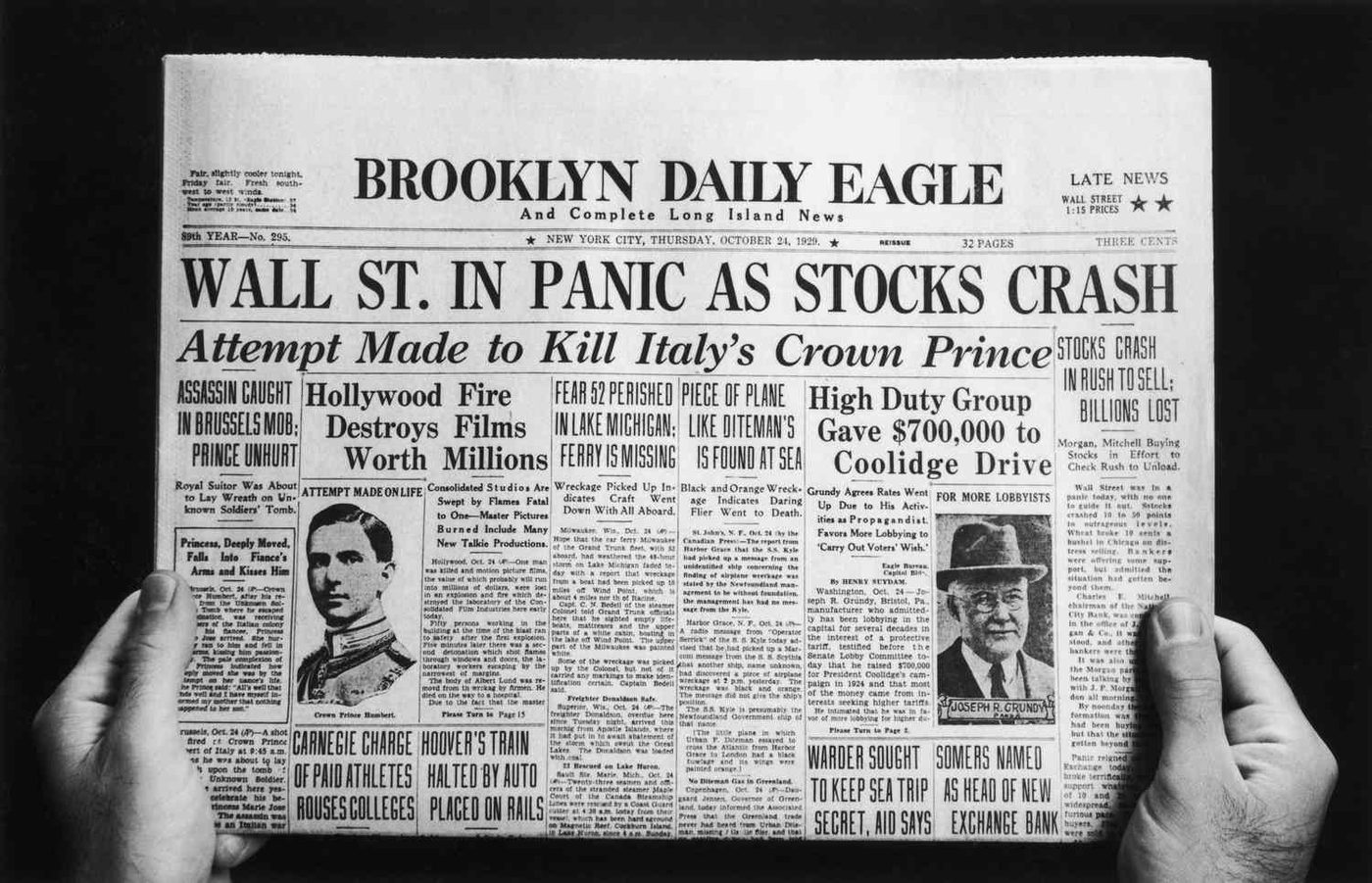
Every major financial collapse in history, from the 1929 Great Depression to the dot-com crash of 2000 and the housing crisis of 2008, followed a similar pattern.
At first, there is genuine growth. New technology, new markets, or new credit expands the economy.
Then optimism turns into overconfidence. People begin to believe that “this time is different.” Risk is ignored because prices keep rising.
Debt grows faster than income.
Eventually, one small shock reveals how fragile the system has become.
Crashes are not caused by one event. They are caused by systems stretched too far.
Today, we are once again in that late stage. But unlike previous cycles, the stress is no longer limited to one sector like technology or housing. It is spread across stocks, credit, government debt, and currencies at the same time.
The thing which make the this crash worse is the US
What makes this coming crash more dangerous from 2000 or 2008 is the position of the United States itself.
The US is not just another large economy. It is the backbone of the global financial system.
For decades, the world has operated on a simple but powerful arrangement. Countries across Asia, Europe, Africa, and the Middle East recycle their savings into US Treasury bonds, treating them as the safest asset on Earth.
Central banks hold their foreign exchange reserves primarily in US dollars. International trade- especially oil, commodities, and global finance- is settled in dollars. This structure places the United States at the very center of global money flows.
This system works only as long as one thing remains intact: confidence.
Confidence that US Treasury bonds are risk-free.
Confidence that the dollar is politically neutral.
Confidence that reserves held in dollars will always remain accessible.
Once this confidence is eroded, the entire structure would collapse.
That confidence was tested for the first time in a major way during the Russia–Ukraine war.
When the United States and its allies froze Russia’s foreign exchange reserves, the message sent to the rest of the world was loud and clear: the dollar is not just money — it is a weapon.
Russia technically “owned” those reserves, but it could not use them.
In effect, assets held in dollars were revealed to be conditional, usable only as long as political alignment exists. For many countries, this was a wake-up call.
From that moment, central banks around the world began to reassess their exposure. Not overnight, not dramatically — but steadily and deliberately. Countries including China, Japan, India, and several European states started reducing their dollar-denominated reserves and increasing their holdings of gold, an asset with no counterparty risk and no political master.
This shift is visible today in record central-bank gold purchases. It is not speculation. It is preparation.
The Dollar Weaponisation Problem
Today, in the era of Donald Trump, this weaponisation of the dollar intensified.
Tariffs, sanctions, trade threats, and financial pressure became routine tools of US foreign policy — applied not only to rivals, but increasingly to allies as well.
This is happening at the worst possible time.
The United States is now carrying more than $38 trillion in debt, a level many economists describe as structurally unsustainable. Even more alarming is the cost of servicing that debt. Interest payments are exploding, consuming an ever-larger share of government spending.
Borrowing is no longer being used to invest in growth or productivity. It is increasingly being used simply to pay interest on past borrowing.
History is very clear on this point: when a state reaches the stage where debt sustains debt, confidence eventually breaks.
When the entire system has no way to run away
Most people think crashes start in stock markets. Stocks are visible, emotional, and widely discussed.
But stocks are not the core of the financial system. Credit and bonds are.
US Treasury bonds are the foundation upon which global finance is built. They are used as collateral in banking.
They sit at the core of pension funds and insurance systems. They serve as the “risk-free” benchmark against which every other asset is priced.
As long as Treasuries are trusted, the system functions.
But if that trust weakens, instability spreads everywhere at once.
This is what makes the current moment uniquely dangerous.
In the 2000 dot-com crash, technology stocks collapsed, but US government bonds remained strong.
In the 2008 financial crisis, banks failed, but Treasuries became a safe haven. Policymakers could always rely on the bond market to absorb shocks and restore confidence.
What makes it worse is that? Today, that safety net itself is under strain.
Bond markets are extremely sensitive. Even small doubts can cause large movements in yields. Rising yields mean higher borrowing costs — not just for the US government, but for companies, households, and other countries that price their debt off US Treasuries.
This tightens financial conditions globally, all at once.
And unlike previous crises, there is no larger, safer asset left to absorb the shock.
If confidence in US Treasury bonds cracks, there is no Plan B. No bigger balance sheet. No higher authority. The system has nowhere left to run.
This is why the coming crisis could be worse than anything seen in modern financial history.
The bubble is not only in stocks, real estate, or technology. It is in the very instruments that hold the system together.
When housing collapsed in 2008, money survived.
When tech collapsed in 2000, bonds survived.
If Treasuries collapse, money itself is questioned.
That is the line the world is now approaching.
Artificial Intelligence: The biggest bubble that will explode
To understand why artificial intelligence could become one of the main triggers of the next market crash, it helps to look back at history.
In the late 1990s, the world was consumed by excitement around the internet.
New companies appeared almost overnight.
Investors believed they had discovered a new economic era where old rules no longer applied.
Stock prices rose rapidly, profits were ignored, and valuations were justified by future promises.
Then, in 2000, reality caught up. The Nasdaq collapsed by nearly 80 percent.
Most dot-com companies disappeared.
The internet survived and went on to transform the world, but investors who bought into hype rather than fundamentals lost everything.
Today, the same pattern is emerging again — this time under the banner of artificial intelligence.
Artificial intelligence is real.
It is powerful. It will change industries. But once again, expectations have run far ahead of profits.
A small group of companies now dominates the AI narrative, and their stock prices carry an enormous share of the entire US market.
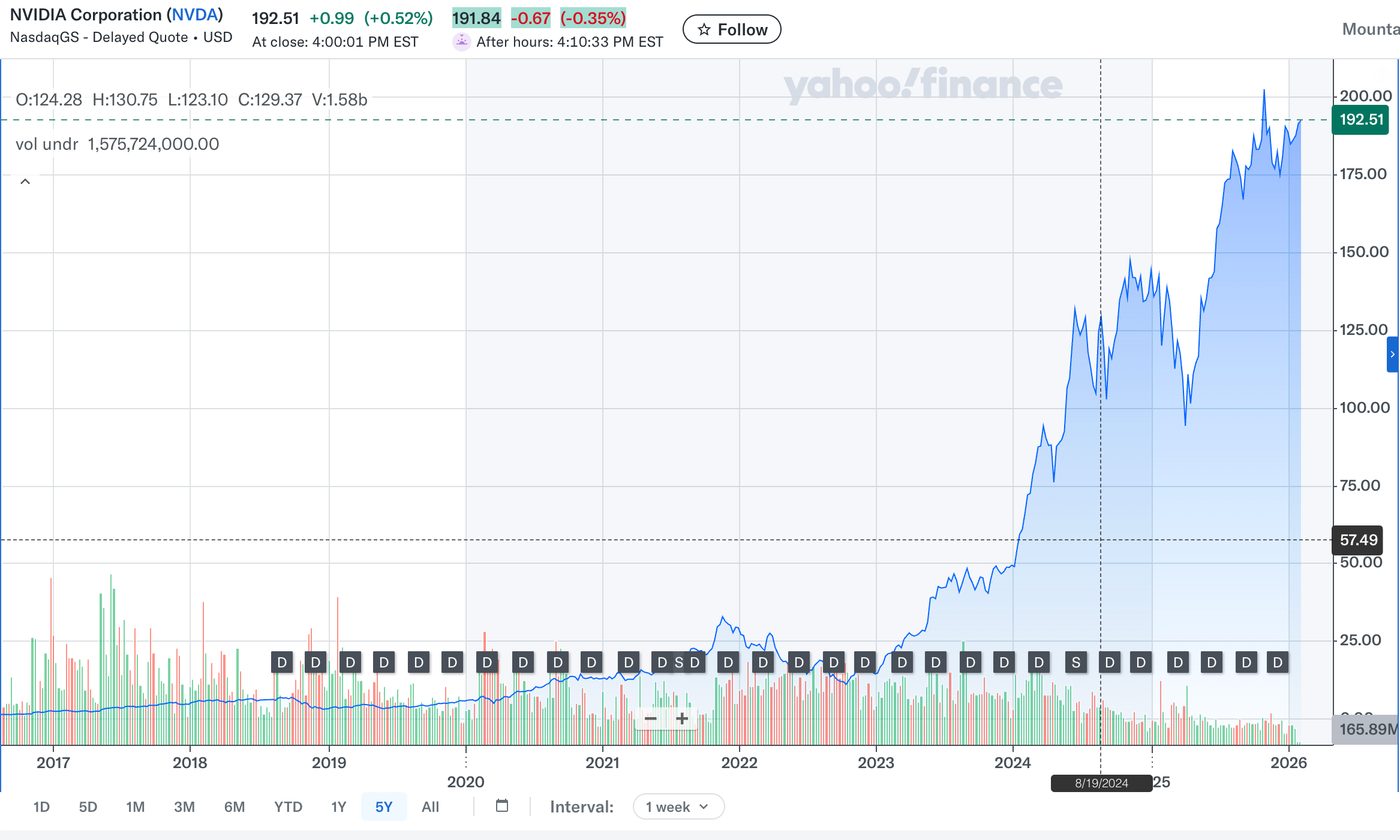
Companies such as Apple, Microsoft, Amazon, Alphabet, Meta, Tesla, and NVIDIA have become so large that the direction of the stock market increasingly depends on their performance alone.
This level of concentration is historically dangerous. When markets depend on a handful of companies to deliver perfect results, even small disappointments can cause large crashes.
The risk is made worse by the scale of spending.
AI companies are investing hundreds of billions of dollars into chips, data centers, cloud infrastructure, and energy.
In a single year, AI-related spending by major technology firms exceeds the GDP of many developed countries.
This spending is not just shaping the future — it is also keeping the present economy afloat. Without AI-related investment, US economic growth would already look far weaker.
That means the economy has become dependent on continuous AI spending to maintain the appearance of strength.
If that spending slows, because profits disappoint, credit tightens, or investors lose confidence, markets may suddenly realise how fragile the broader system has become.
An even deeper problem lies in how money circulates within the AI ecosystem. Many AI companies fund each other through complex investment relationships.
Large firms invest billions into AI startups, those startups spend the money on cloud services and data centers owned by the same firms, and hardware suppliers sell chips to everyone while investing back into their customers.
This creates circular capital flows where revenue appears strong, but much of the demand is generated inside the system itself rather than by sustainable end-user profits.
This does not mean fraud is taking place. But it does mean valuations can become artificially inflated, especially when money is cheap and optimism is high.
When financing conditions tighten, such structures tend to collapse quickly.
Valuations across the AI sector now assume near-perfect outcomes: rapid technological progress, massive profits, and smooth scaling. Many companies are priced at extremely high multiples despite losing money every quarter.
History shows that markets are unforgiving when perfection fails to materialise.
Crashes rarely begin with stock selling. They usually begin with credit stress. Across the US economy, companies and consumers are heavily leveraged. Many firms must refinance large amounts of debt at much higher interest rates than before.
This squeezes profits and increases default risk. When weaker borrowers fail, lenders pull back. Credit dries up. Investment slows. Layoffs rise. Demand falls. Financial stress then spreads from markets into the real economy.
The danger today is that this tightening of credit could occur while AI valuations remain stretched and while governments themselves are deeply indebted.
In previous crashes, governments could step in aggressively to stabilise markets. Today, high public debt and rising interest costs limit that ability.
Artificial intelligence itself will not destroy the economy.
Just as the internet did not destroy the world in 2000. But finance has once again moved faster than reality.
AI has become the engine of market optimism, the justification for extreme valuations, and the mask hiding deeper economic weakness.
When expectations reset, AI stocks could fall sharply. Because these companies now sit at the centre of the market, their fall could drag the entire system down with them — acting not as the cause of the crisis, but as one of its most powerful triggers.
Why This Crash Could Be Worse Than Before
The reason this potential crash is more dangerous than 2000 or 2008 is simple: there is no clean escape route left.
Interest rates are already high relative to debt levels. Central bank balance sheets are already stretched.
Governments are already running large deficits. The usual tools have been used again and again.
If confidence breaks now, policymakers may find that their responses create new problems instead of solutions.
This does not mean the system collapses overnight. It means prolonged instability, sharp market swings, uneven inflation, social stress, and geopolitical tension.
Crashes today unfold over years, not weeks.
Many people ask whether such a crash would be inflationary or deflationary. The honest answer is: both, at different times.
Initially, asset prices fall. Stocks, real estate, and speculative investments collapse.
This is deflation. Later, as governments intervene and supply chains weaken, everyday costs like food, fuel, and rent rise.
This is inflation.
For ordinary people, this is the worst possible combination: falling wealth and rising living costs.
The Deeper Meaning of the Coming Crisis
At its core, the coming financial crisis is not just about money. It is about trust.
Modern finance is built on confidence, confidence that debts will be paid, currencies will hold value, and institutions will act responsibly.
When that confidence weakens, markets do not adjust smoothly. They break suddenly.
The United States remains central to the global system, but that central role now amplifies its vulnerabilities.
AI optimism, rising debt, political pressure, and fragile credit markets are not separate problems. They are interconnected.
This is why the next crash, if it comes, will not simply be another downturn.
It will be a reordering moment, one that reshapes markets, power, and expectations for a generation.